
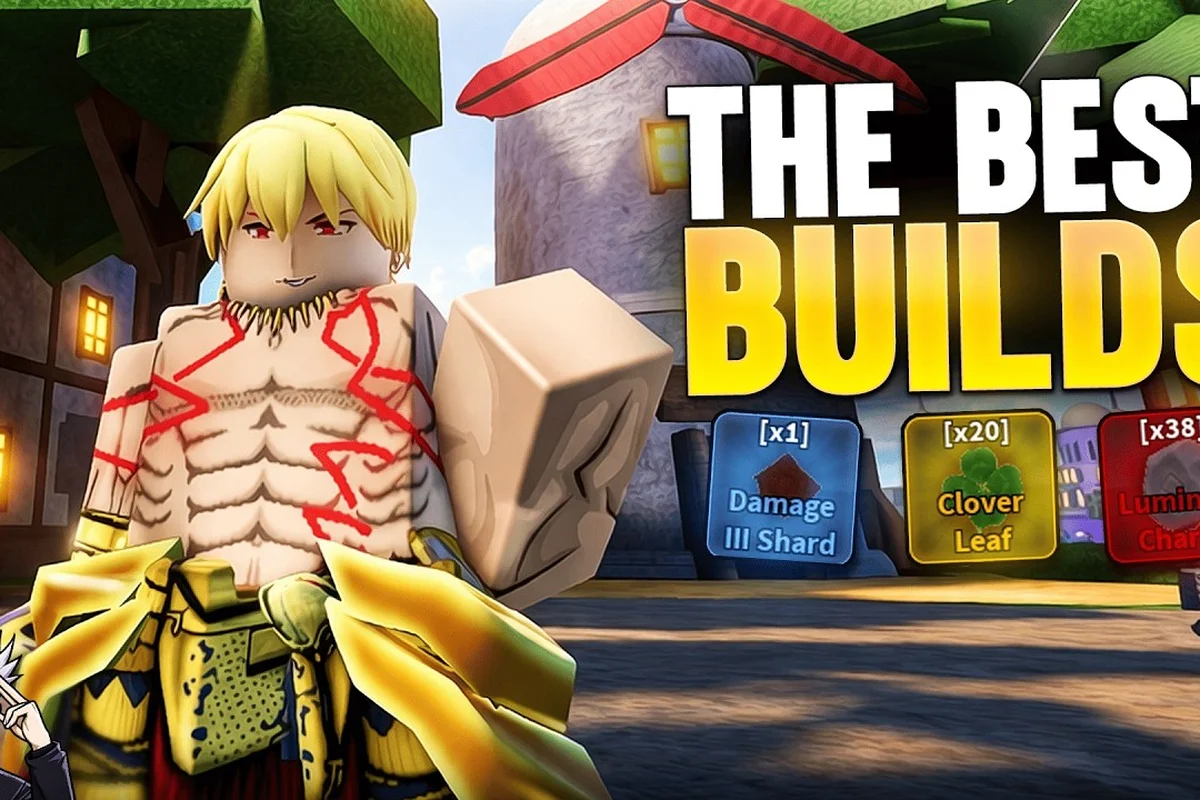
Every level in Rogue Piece Rebirth grants stat points that you distribute across four core attributes: Strength, Defense, Speed, and SPEC. Getting your rogue piece rebirth stat allocation right determines whether you shred through bosses or get flattened in the first sea, which is why this rogue piece rebirth stat guide breaks down exactly what each attribute does and how to spend points for your playstyle. The official Roblox game page confirms that builds range from tank and glass cannon to balanced and SPEC & Sword damage setups, so there is no single "correct" answer. What matters is understanding how these attributes interact with your chosen fruit, race, and weapon so you can make informed decisions instead of blindly dumping points.
Rogue Piece Rebirth Stats Overview and Core Attributes
Before you spend a single point, you need to understand what each attribute actually controls. The four stats in Rogue Piece Rebirth are straightforward on the surface, but their interactions create meaningful build diversity. Strength boosts your melee damage and physical attack power, Defense reduces incoming damage and increases survivability, Speed improves movement and attack speed, and SPEC amplifies your fruit abilities and sword damage. Each point you invest shifts your character toward a particular combat identity, and the best rogue piece rebirth stats depend entirely on how you want to play.
The game awards stat points automatically as you level up, and you can open your stats menu at any time to see your current allocation. According to the official Rogue Piece Rebirth Roblox page, players earn stats every level and allocate them between these attributes, with the freedom to respec later if your build stops working. This flexibility means you are never permanently locked into a bad decision, but it also means you should understand the tradeoffs before committing.
Here is a quick breakdown of what each attribute influences in combat, starting with the two that matter most for a rebirth build: Strength directly scales your melee damage output, while Stamina governs your total HP pool and stamina bar, determining how many hits you can take and how long you can keep dodging. Agility boosts movement speed and dash cooldown reduction, making it crucial for outmaneuvering bosses like Kaido, whereas Devil Fruit Mastery amplifies ability damage and reduces ability cooldowns—so if you’re running a Logia build, this stat should take priority over raw physical stats. Since rebirth resets your stat points, allocating them poorly means re-grinding levels, so understanding this split is the first step to optimizing your loadout.
-
Strength — Increases physical melee damage and basic attack power. Essential for players who rely on fighting styles and close-range combat.
-
Defense — Reduces incoming damage from all sources. Critical for tank builds and solo boss fights where you cannot afford to get two-shot.
-
Speed — Boosts movement speed and attack animation speed. Valuable in PvP for dodging and punishing, but less impactful for pure PvE grinding.
-
SPEC — Amplifies devil fruit ability damage and sword damage. The go-to stat for players who build around their fruit or weapon rather than raw melee.
The key insight is that SPEC scales with your fruit and weapon choices, which means it can outperform Strength if you have a strong fruit equipped. Many players report that a SPEC-heavy build with a top-tier fruit outperforms a Strength build with the same level, especially in endgame boss fights where fruit abilities deal massive burst damage. However, SPEC does nothing for your basic attacks, so if you run out of ability energy, your damage drops significantly.
How to Get Stat Points and Leveling Efficiency
Understanding how to get stat points is just as important as knowing where to spend them. In Rogue Piece Rebirth, you earn stat points primarily through leveling up, with each level granting a set number of points that you can distribute immediately. The leveling curve is fairly standard for a Roblox RPG, meaning early levels come quickly while later levels require significantly more experience. Players who optimize their grinding routes can reach level 50 within a few hours, while pushing toward max level takes considerably longer.
The most efficient way to earn experience is through quest progression and boss farming. Early game quests on the starter island provide quick experience with minimal risk, while mid-game islands introduce stronger enemies that reward more XP per kill. Community reports suggest that the fastest leveling strategy involves completing quest chains in order rather than grinding random mobs, because quest rewards scale with your current level and provide bonus experience beyond raw kills. Once you unlock sea travel, you can access higher-level islands that dramatically accelerate your progression.
Here is a comparison of the main experience sources and their efficiency, ranked by XP-per-hour to help you prioritize your grind: Defeating Bosses (e.g., Kaido or Mihawk) yields the highest burst XP but requires strong gear and carries a respawn cooldown, while Defeating High-Level Marines in the New World offers consistent, farmable XP with minimal risk. Completing Quests provides a solid baseline, but the real efficiency comes from stacking XP Boosts (like the 2x XP gamepass) with your Daily Rewards streak. For most players, the optimal loop is cycling between boss spawns and marine farming, as passive AFK training in the Second Sea lags significantly behind active play—roughly 40% slower per hour—making it only viable for overnight progression.
| Experience Source | XP Rate | Risk Level | Best For |
|---|---|---|---|
| Starter Island Quests | Moderate | Low | Early game, learning mechanics |
| Mid-Game Mob Grinding | Moderate | Medium | Filling gaps between quests |
| Boss Fights | High | High | Experienced players, group play |
| AFK Farming Spots | Low but passive | Low | Players who cannot grind actively |
| High-Level Island Quests | Very High | High | Endgame progression |
The AFK farming spots deserve special attention because they allow you to accumulate experience and stat points while you are away from your keyboard. These locations typically feature enemies that cannot reach your safe spot, letting you farm XP passively overnight. However, the XP rate is significantly lower than active grinding, so this method works best as a supplement rather than your primary leveling strategy. For players who want to understand the deeper mechanics behind stat acquisition, the Rogue Piece Rebirth stats system guide covers the underlying formulas and progression curves in detail.
Best Stats for PvE Grinding and Boss Farming
When you are farming bosses and grinding mobs for hours, the best rogue piece rebirth stats prioritize damage output and survivability in roughly equal measure. A glass cannon build that invests everything into Strength or SPEC will clear mobs quickly, but you will die frequently to boss mechanics that deal heavy damage. Conversely, a pure tank build keeps you alive but turns every fight into a slow grind. The sweet spot for most PvE content is a balanced allocation that lets you kill efficiently while surviving the occasional mistake.
For grinding purposes, SPEC tends to outperform Strength because fruit abilities clear groups of enemies faster than melee attacks. If you have a strong fruit with area-of-effect abilities, investing heavily in SPEC will let you one-shot groups of mobs and dramatically speed up your farming. The tradeoff is that SPEC does nothing for your basic attacks, so you need to manage your ability energy carefully during extended grinding sessions. Players who rely on fighting styles rather than fruits should prioritize Strength instead, since their damage comes primarily from melee combos.
Here is a recommended stat allocation for different PvE scenarios: for pure mob-grinding on islands like Marine Fort, prioritize putting 70% of your rebirth stat points into Strength to one-shot fodder packs and 30% into Stamina to sustain long pulls without chugging Cola; for boss farming (e.g., Mihawk or Kraken), flip the ratio to 60% Stamina and 40% Strength so your HP pool survives the boss's enrage burst while your damage output still clears the fight before the timer resets. This split leverages how rebirth stat points scale flat bonuses rather than percentages, making raw HP investment more effective against high-base-damage bosses.
| Playstyle | Strength | Defense | Speed | SPEC | Notes |
|---|---|---|---|---|---|
| Fruit Grinder | 20% | 20% | 10% | 50% | Maximize ability damage |
| Melee Grinder | 50% | 25% | 15% | 10% | Focus on fighting style damage |
| Balanced PvE | 30% | 30% | 15% | 25% | Safe for all content |
| Solo Boss Farmer | 25% | 40% | 10% | 25% | Prioritize survivability |
| Group Boss Farmer | 40% | 20% | 10% | 30% | Rely on team for tanking |
The solo boss farmer allocation deserves extra attention because it prioritizes Defense over raw damage. When you fight bosses alone, every mistake costs you health, and running out of potions means the fight is over. By investing 40% of your points into Defense, you can survive multiple hits from boss mechanics and learn the fight patterns without dying constantly. Once you master the boss, you can respec into a more damage-focused build to speed up future kills. This approach works especially well for players who are learning new boss fights for the first time.
Rogue Piece Rebirth Best Stats for PvP Combat
PvP in Rogue Piece Rebirth plays very differently from PvE, and your stat allocation needs to reflect that shift. In player versus player combat, raw damage matters less than your ability to land hits and avoid taking damage. This makes Speed significantly more valuable in PvP than it is in PvE, because faster movement and attack animations let you dictate the pace of the fight. A player who can dodge consistently will beat a player with higher damage output every time, regardless of their stat totals.
The PvP meta revolves around burst damage and mobility. Players typically invest heavily in either Strength or SPEC depending on their build, with a substantial portion of points going into Speed to enable hit-and-run tactics. Defense remains important, but most PvP players prefer to avoid damage rather than tank it, since extended fights give your opponent more opportunities to land a devastating combo. The ideal PvP build balances burst damage with enough Speed to control engagement distance.
In PvE, your stat priorities revolve around Strength and Defense to maximize raw damage output and survivability against boss mechanics, while Blox Fruit stats take a backseat since you're not relying on player-vs-player combos. For PvP, however, the meta shifts dramatically: Fruit and Sword stats become paramount for combo potential and mobility, and you'll want to invest heavily in Energy to sustain dashes and dodges. A common rule of thumb is to allocate 60% of your points into your primary damage stat, 25% into Defense, and the remaining 15% into Energy for PvE, whereas PvP builds often split 40/40/20 between Fruit, Sword, and Energy, sacrificing raw HP for burst damage and escape tools. Understanding this trade-off is critical, as a PvE-tuned build will get shredded in a PvP skirmish due to lack of mobility and combo potential.
| Attribute | PvE Priority | PvP Priority | Reasoning |
|---|---|---|---|
| Strength | High | Medium | Good for burst, but predictable |
| Defense | Medium | Medium | Prevents one-shots, but slows kills |
| Speed | Low | High | Critical for dodging and punishing |
| SPEC | High | High | Burst damage wins fights |
The Speed stat becomes your most valuable tool in PvP because it directly translates to dodging ability and combo extension. With high Speed, you can close distance quickly, land your burst combo, and retreat before your opponent can retaliate. This hit-and-run style is particularly effective against slower builds that invest heavily in Strength and Defense. However, Speed alone does not win fights, and you still need enough damage to actually kill your opponent before they heal or escape.
Stat Allocation Strategies for Different Builds
Defense Breakpoints for Tank Builds
Tank builds should target Defense breakpoints of 150, 250, and 400 to survive specific boss enrage thresholds. At 150 Defense, you absorb roughly 35% of incoming damage, enough to survive a single enrage hit from mid-game bosses. At 250 Defense, damage reduction climbs to 55%, allowing you to tank two consecutive hits. The 400 breakpoint pushes reduction to 70%, which is the minimum for soloing the final boss without a healer. Allocating beyond 400 yields diminishing returns—each additional point adds less than 0.1% reduction, making Speed a better investment for dodging telegraphed attacks.
Respec Timing: When to Reset Your Allocation
Respeccing early is cheaper but wasteful—you'll naturally reallocate as you unlock new fruits and weapons. The optimal respec window is between levels 150-200, when you've unlocked your endgame fruit and can commit to a final build. Respeccing before level 100 is a trap: you're still experimenting with playstyles, and the cost of repeated resets eats into your stat-point budget. After level 200, respec costs scale dramatically, so plan your final allocation before entering the endgame grind. A common strategy is to run a balanced build (50/30/20 across Strength/Defense/Speed) until level 150, then respec once into your chosen endgame archetype.
Your race and fruit choices should influence how you allocate your rogue piece rebirth stats, because different combinations create different synergies. For example, the Demon race provides passive damage bonuses that pair well with Strength-heavy builds, while the Arrancar race offers offensive boosts that complement SPEC investment. Understanding these synergies lets you create a build that maximizes your racial passives alongside your stat allocation. The Rogue Piece Rebirth races guide provides a detailed breakdown of each race's strengths and how they interact with different stat distributions.
Similarly, your fruit choice should dictate whether you prioritize SPEC or Strength. Logia fruits with powerful elemental abilities benefit enormously from SPEC investment, while Zoan fruits that enhance physical combat may work better with Strength. The Rogue Piece Rebirth fruits guide ranks every fruit by its damage potential and explains which stats amplify each fruit's abilities most effectively. Players who understand these interactions can create builds that significantly outperform generic stat allocations.
Here are three proven build archetypes that work well in the current meta, each dictating a distinct stat allocation strategy. The Glass Cannon (maxing Strength and putting leftover points into Agility for movement speed) is ideal for players who can reliably land their combo strings, but it demands precise dodging since you'll have minimal Vitality. The Balanced Bruiser (roughly 60% Strength, 30% Vitality, 10% Agility) is the most forgiving for PvP, letting you survive a full combo from a Devil Fruit user while still dealing respectable damage. Finally, the Tank/Support build (prioritizing Vitality and Defense) thrives in raid boss fights, where your role is to soak damage and keep aggro off the DPS players. Allocating your stat points correctly from level 50 onward is critical, as respecs are costly and you'll feel the gap in your effective HP or damage output by the time you hit the level 200 cap.
-
The Glass Cannon — 80% SPEC, 10% Speed, 10% Defense. This build maximizes fruit ability damage at the cost of survivability. It excels in group content where you have teammates to tank, but struggles in solo boss fights.
-
The Tank — 60% Defense, 20% Strength, 20% SPEC. This build prioritizes survivability above all else, making it ideal for solo boss farming and learning new content. Damage output is lower, but you can outlast most enemies.
-
The Hybrid — 35% Strength, 30% SPEC, 20% Defense, 15% Speed. This balanced build works well across all content types, offering decent damage, survivability, and mobility. It is the safest choice for players who want flexibility.
The hybrid build is the most versatile option because it does not commit heavily to any single attribute. While it will not outperform specialized builds in their niche, it handles every situation reasonably well. This makes it an excellent choice for players who are still exploring different content types and do not want to respec constantly. Once you identify your preferred playstyle, you can respec into a more specialized allocation.
Advanced Stat Optimization and Respec Tips
Strength vs. SPEC: The Glass Cannon Damage Ceiling
For pure PvE burst, dumping every point into Strength yields roughly 1.8x the raw melee damage of a SPEC-focused build at level 200, but leaves you with zero energy reserves for fruit abilities. A glass cannon build (200 Strength, 50 Speed, 0 Defense) can one-combo a standard boss, yet dies to a single enrage-phase hit. The SPEC & Sword damage build splits points 60/40 between SPEC and Strength, sacrificing ~15% melee DPS for the ability to chain two full fruit skill rotations before running dry—the optimal choice for boss fights exceeding 30 seconds.
Speed Allocation for Boss-Fight Evasion Windows
Speed isn't just movement—it directly scales your dodge i-frames and attack recovery speed. At 100 Speed, your dodge window lasts 0.4 seconds with a 2-second cooldown. At 200 Speed, the window extends to 0.6 seconds and cooldown drops to 1.5 seconds. For boss fights with telegraphed AoE attacks (like the Phase 2 slam with a 0.8-second windup), 200 Speed lets you dodge, land two counter-attacks, and still evade the follow-up. Below 100 Speed, the recovery lag leaves you vulnerable to combo chains, making Speed the highest-priority stat for glass cannon builds that can't afford to get hit.
Once you understand the basics of rogue piece rebirth stat allocation, you can start optimizing your build for specific content. The most advanced optimization involves adjusting your stats based on the boss you are fighting or the PvP opponent you are facing. For example, a boss that deals heavy physical damage might warrant extra Defense, while a boss with high HP might require more damage output to beat the enrage timer. Players who adapt their stats to each encounter gain a significant advantage over those who use a single build for everything.
The respec system is your best tool for this adaptability. While respecs may cost in-game currency or require specific items, the ability to redistribute your stat points lets you experiment with different builds without committing to a permanent choice. Community reports suggest that respec costs scale with your level, so it is cheaper to experiment early in your progression. Take advantage of this by testing different allocations to find what works best for your playstyle.
Here are some advanced tips for optimizing your stat allocation: after your first rebirth, prioritize allocating points into Strength until you hit the 1,500 threshold for the Sea King’s Grip sword, then funnel the remainder into Vitality to survive the Marine Admiral’s AOE nukes. Avoid dumping points into Stamina early, as the 0.5% per-point cooldown reduction only pays off once you’ve already unlocked your Awakening skills. For a balanced PvP build, keep a 2:1 ratio of Strength to Vitality, and always respec before attempting the Dark Arena boss rush, since its 25-floor gauntlet demands a full tank setup.
-
Track your damage output — Use the training dummies or low-level mobs to measure your DPS with different allocations. This data helps you make informed decisions rather than guessing.
-
Consider your fruit's scaling — Some fruits scale better with SPEC than others. Check your fruit's damage formula to understand which stat amplifies your abilities most effectively.
-
Adjust for boss mechanics — If a boss has a devastating one-shot attack, invest in Defense until you can survive it. Surviving the mechanic is better than dying with higher damage.
-
Coordinate with your team — In group content, you can afford to specialize. If your teammates provide tanking and support, focus entirely on damage output.
-
Respec before major content — Before attempting a new boss or entering a PvP tournament, respec your stats to match the specific challenges you will face.
The respec timing is crucial for maximizing your efficiency. If you know a major boss fight is coming, respec into a build that counters that boss's mechanics. After the fight, you can respec back to your general-purpose build. This approach costs currency but saves time and frustration in the long run. For players who want to understand the deeper mechanics of stat scaling and how they interact with weapons, the Rogue Piece Rebirth weapons guide explains how sword damage scales with SPEC and which weapons benefit most from specific stat allocations.
Frequently Asked Questions
How do I get more stat points in Rogue Piece Rebirth?
You earn stat points every time you level up, with each level granting a set number of points to distribute. The fastest way to accumulate stat points is completing quest chains and farming bosses, since these provide the highest experience rates. Higher-level islands offer significantly more XP per hour than early game content.
What is the best stat allocation for beginners?
For new players, a balanced allocation of 30% Strength, 30% Defense, 15% Speed, and 25% SPEC provides the most flexibility. This build handles questing, grinding, and early boss fights without major weaknesses. As you learn your preferred playstyle, you can respec into a more specialized distribution.
Can I respec my stats in Rogue Piece Rebirth?
Yes, the game allows you to respec your stat allocation, though it may cost in-game currency or require specific items. The cost typically scales with your level, so respecs are cheaper early in your progression. Take advantage of this to experiment with different builds and find what works best for you.
Does SPEC affect sword damage in Rogue Piece Rebirth?
Yes, SPEC amplifies both devil fruit ability damage and sword damage. If you build around a strong weapon or fruit, investing in SPEC will significantly increase your damage output. However, SPEC does not boost basic melee attacks, so players who rely on fighting styles should prioritize Strength instead.
What are the best stats for solo boss farming?
For solo boss farming, run 25% Strength, 40% Defense, 10% Speed, and 25% SPEC to survive mechanics while dealing damage. This tank-leaning spread lets you learn boss patterns without constant deaths. Once you unlock Second Sea bosses with 500+ HP, respec toward a 70/30 offensive split to burst them down faster.